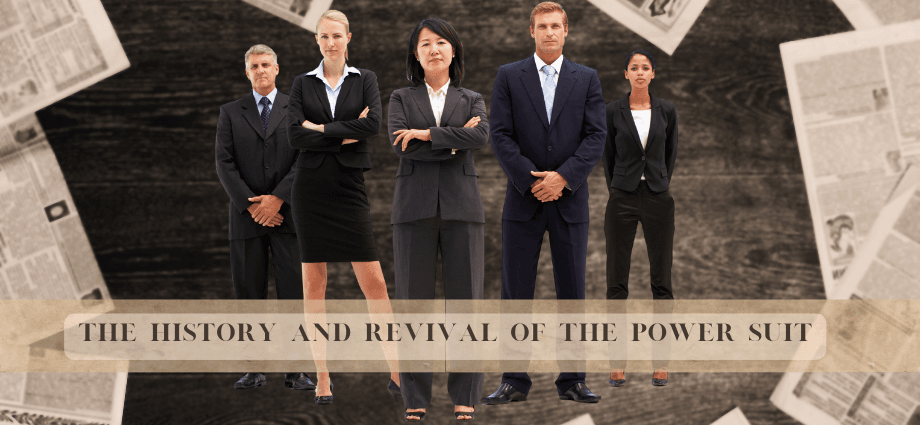
The power suit has long been associated with success, authority, and professionalism. This iconic piece of clothing is not just about appearance but serves as a symbol of confidence, leadership, and influence. It has evolved significantly over time, changing with fashion trends and societal norms. From its humble beginnings to its grand revival in the 21st century, the power suit continues to capture attention and convey power in the modern world. This article explores the history of the power suit, its cultural significance in different eras, and how it has made a powerful comeback today.
The Origins of the Power Suit
The power suit’s roots trace back to the 19th century when tailored clothing first became a symbol of wealth and status. Over time, this form of structured, professional attire evolved, laying the foundation for the iconic power suit we recognize today. It became a symbol of authority and success, especially in the business world.
Early Beginnings in the 19th Century
In the 1800s, tailored suits first became a symbol of wealth, status, and power, primarily for wealthy men. The idea of custom-made clothing was exclusive to the upper class, and their perfectly fitted suits reflected their place in society. These garments were crafted from fine fabrics and were designed to highlight the wearer’s social standing. During this time, fashion began to evolve from the rigid and extravagant styles of the past into more practical, structured outfits.
While women’s clothing during the 19th century remained restrictive and ornamental, signs of a shift toward more structured fashion began to emerge. The corset and layers of dresses were slowly replaced by simpler, more functional clothing that allowed women to move freely and take on more public roles.
- Men’s Tailored Suits: Wealthy men wore tailored suits to showcase their status, with the focus on craftsmanship and fabric quality.
- Women’s Clothing: Women’s clothing was starting to show signs of change, as society began slowly moving toward more functional and practical designs.
- Fashion as Power: Clothing became a way to project authority, and status through appearance began to take shape during this period.
The 20th Century: The Rise of the Power Suit
By the early 1900s, tailored suits had become the hallmark of professional and corporate life, particularly for men. This was the beginning of the power suit as we recognize it today. The classic suit, made from high-quality wool or other materials, was worn to convey a sense of seriousness, leadership, and wealth. Suits became the standard attire for businessmen, reflecting a male-dominated world where success was often measured by external symbols such as dress and appearance.
In the 1960s, the power suit was further popularized during the “Mad Men” era, a time when men’s suits were worn with precision and sharpness. The look was characterized by clean lines, narrow lapels, and perfectly fitting trousers. The power suit came to embody the American dream, symbolizing a successful businessman’s ability to lead and command.
The Power Suit in the 1980s
The 1980s was a defining decade for the power suit, as it became a symbol of authority, ambition, and gender equality. With women increasingly entering the corporate world, the power suit evolved to reflect their desire to assert themselves in a male-dominated environment, marked by bold designs and dramatic features like shoulder pads.
The Influence of Women in Business
The 1980s were a transformative decade for the power suit, particularly for women. As women entered the corporate world in larger numbers, the traditional, male-dominated business attire needed to evolve to meet their needs. The power suit became the key to women asserting their authority in a workplace that had long been dominated by men. The inclusion of shoulder pads and bold patterns helped women stand out and make a statement that they, too, could be strong, confident, and authoritative leaders.
- Shoulder Pads: Worn to enhance the shoulders and give a more assertive, masculine silhouette, shoulder pads became synonymous with the 1980s power suit.
- Bold Colors: Women embraced vibrant colors like red, purple, and teal, which were designed to stand out and create an impression of power and confidence.
- Structured Fabrics: Heavier fabrics such as wool were used to maintain a structured appearance, reinforcing the idea of a professional, competent individual.
Women used the power suit to show that they belonged in the corporate world, and they wore these suits as a sign of their drive for equality in the workplace.
Fashion Icons and Hollywood
The power suit of the 1980s was also popularized by fashion icons and media portrayals. Celebrities such as Joan Collins in Dynasty and Meryl Streep in The Devil Wears Prada made the power suit not just a symbol of professionalism but a glamorous fashion statement. The iconic suit became synonymous with strong, independent women who were breaking barriers in both business and entertainment. It wasn’t just about professional success anymore; it was also about looking stylish while doing it.
The 1980s saw the fusion of business and fashion, with the power suit becoming a statement of both authority and personal style. Women no longer had to sacrifice style for professionalism.
Decline of the Power Suit in the 1990s and 2000s

As workplaces became more relaxed and fashion trends shifted, the power suit began to lose its dominance in the 1990s and 2000s. Casual dress codes and a focus on comfort led to the decline of the sharply tailored suit, as people favored more informal and flexible attire.
Casual Workplace Dress Codes
The 1990s and early 2000s marked a shift in the corporate world toward more relaxed dress codes. As workplaces began adopting business casual attire, the power suit, once essential to professional life, began to feel out of place. The traditional suit became less of a requirement for success in the workplace. Employees could now wear comfortable clothing, such as chinos and polo shirts, and still maintain a professional image.
- Business Casual: Many companies started allowing employees to dress more casually, which led to a decline in the popularity of suits.
- Relaxed Office Atmosphere: As casual wear became more acceptable, the need for the sharp, structured appearance of the power suit decreased.
- Focus on Comfort: With the rise of smart casual dress codes, workers favored comfort over formality.
This shift also coincided with a more relaxed attitude toward work-life balance, where personal expression through clothing became more important than adhering to a formal dress code.
Changing Fashion Trends
The minimalism of the 1990s and early 2000s further contributed to the decline of the power suit. Simple, clean-cut, and easy-to-wear garments replaced the rigid, structured look of the power suit. With the rise of casual styles, the power suit was seen as outdated, and fashion trends leaned toward more relaxed and versatile attire. People began embracing individualistic styles, rejecting the conformity of traditional business attire.
The Revival of the Power Suit in the 21st Century
The power suit has made a strong comeback, blending timeless style with modern trends. Thanks to social media influencers, celebrity endorsements, and a shift toward inclusivity, the power suit is now embraced beyond the workplace. Here’s how it’s been revived and reimagined in the 21st century.
The Influence of Social Media and Influencers
In recent years, the power suit has experienced a revival, partly due to the influence of social media platforms like Instagram and TikTok. These platforms have allowed influencers to showcase the power suit in new, innovative ways. Fashion bloggers and celebrities have reimagined the power suit for a new generation, demonstrating that it can be both powerful and stylish. The modern power suit is not just for business; it is now worn in creative, casual, and even street-style settings.
- Social Media Trends: Instagram and TikTok have allowed influencers to share their unique interpretations of the power suit.
- Celebrities’ Influence: Celebrities like Rihanna, Zendaya, and Meghan Markle have been spotted wearing power suits in a variety of settings, from casual outings to red carpet events.
- Personalized Style: The modern power suit comes in various colors, cuts, and patterns, allowing individuals to personalize their looks and express their personality.
Social media has democratized the power suit, making it accessible to a younger, fashion-forward audience. It’s no longer just for corporate leaders but for anyone looking to project confidence.
Gender Neutrality and Inclusivity
One of the most significant changes in the 21st century power suit is the move toward inclusivity and gender neutrality. Modern designers have embraced a more inclusive approach to suit-making, offering options for all body types, and blurring traditional gender lines. The power suit has become a unifying symbol of empowerment, not confined to men or women but instead meant for anyone who wishes to assert their strength and individuality.
- Tailored for All: Power suits are designed to cater to a wider range of body types, making them accessible to everyone.
- Unisex Designs: Many contemporary power suits feature cuts and styles that are not tied to gender.
- Empowerment for All: The modern power suit is about feeling powerful, regardless of gender or background.
This shift reflects broader societal changes, where the lines between traditionally defined gender roles are becoming increasingly blurred, and empowerment is viewed as something universal.
Corporate and Celebrity Endorsement
Today, the power suit continues to be a key piece in both the corporate world and celebrity fashion. From boardrooms to red carpets, the power suit is worn by influential figures as a statement of confidence and leadership. Major fashion houses like Gucci, Prada, and Versace have also embraced the power suit in their collections, ensuring that it remains relevant and stylish. The power suit continues to symbolize success, not just in business but in a variety of spheres, making it a versatile and enduring garment.
How to Wear the Power Suit Today
The modern power suit is no longer just for the office; it’s a versatile piece for any occasion. With a variety of styles, cuts, and accessories available, it can be customized to reflect your personal style.
Key Features of a Modern Power Suit
The modern power suit is characterized by a blend of comfort, style, and versatility. While the classic sharp tailoring remains, today’s suits come in a range of cuts and colors, allowing individuals to experiment with their personal style. Key features of modern power suits include:
- Relaxed Fit: Suits are now designed with more room and flexibility for comfort, while still maintaining a professional look.
- Bold Colors and Patterns: Modern suits are available in bright colors and unique patterns, allowing wearers to stand out.
- Versatility: Power suits can be styled in numerous ways, from business settings to casual outings or evening events.
Wearing the Power Suit for Various Occasions
One of the greatest benefits of the modern power suit is its versatility. It can be worn in a variety of contexts, from formal work meetings to casual gatherings or even social events. Here are a few tips on how to wear the power suit:
- For Work: Pair the suit with a crisp blouse or button-up shirt for a professional look.
- For Special Occasions: Add accessories like statement jewelry, a bold tie, or a colorful scarf to elevate your look for an evening event.
- For Casual Outings: Dress the suit down by pairing it with sneakers, a graphic tee, or a casual top for a relaxed look.
Conclusion
The power suit has journeyed through several phases, from its origins as a symbol of wealth and status to its modern-day revival as a representation of individual strength and confidence. Over the years, the power suit has adapted to societal changes and continues to be a defining piece in fashion. Today, it stands as a universal symbol of empowerment, transcending gender and industry, and remains a timeless piece that will continue to evolve with the times.