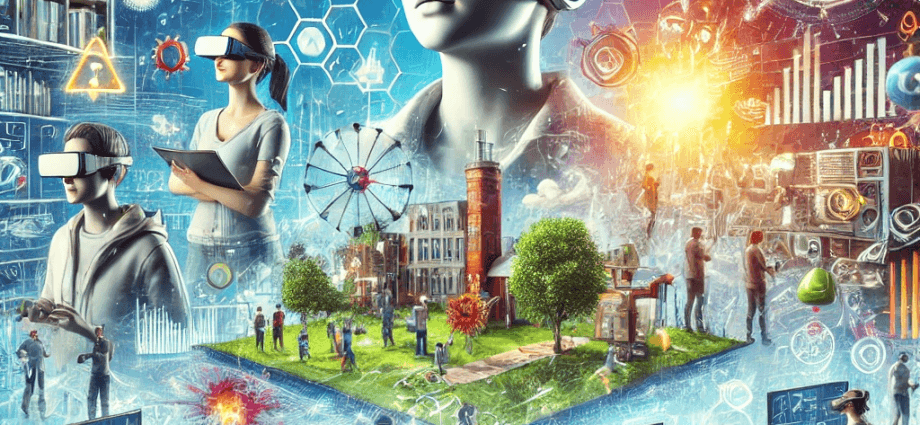
Why AR and VR Are Changing Tech
Augmented reality (AR) and virtual reality (VR) are some of the most exciting and rapidly growing technologies in the world today. These technologies are transforming how we interact with the world around us, both in our personal lives and in professional settings. From enhancing the way we shop to revolutionizing education and healthcare, AR and VR are shaping the future of technology. With innovations happening almost every day, it’s important to understand how these technologies are changing the world and what to expect in the near future.
Why AR and VR Are So Important Right Now
Advancements in Technology
Recent advancements in AR and VR technology have made these tools more accessible and powerful than ever. Some key developments include:
- Improved hardware: Devices like the Oculus Quest and Microsoft HoloLens have become more affordable and more advanced, with better graphics and more comfortable user experiences.
- Faster processors and better displays: These advancements allow for more realistic and immersive experiences in both AR and VR applications.
- Better software: New software tools are making it easier for developers to create high-quality AR and VR experiences, from video games to virtual classrooms.
The Rise of the Metaverse
The metaverse is an emerging digital world that blends AR and VR to create fully immersive virtual environments. This virtual space allows people to socialize, work, and play in digital environments, often using avatars to represent themselves. Many tech companies, including Facebook (now Meta), are heavily investing in building the metaverse, which relies on AR and VR technologies to bring these digital spaces to life.
- Social interactions: In the metaverse, people can meet virtually, attend concerts, or even participate in virtual events and conferences.
- Work and productivity: VR is already being used to hold meetings in virtual offices, allowing people to collaborate from anywhere in the world.
Impact on Various Industries
AR and VR are changing many industries, leading to more efficient ways of doing things. Here’s how:
- Healthcare: AR and VR are transforming medical education and patient care. VR is used for surgical training, and AR can help doctors view medical images overlaid on the patient’s body during surgery.
- Education: Virtual classrooms and AR learning tools help students engage with subjects in new and interactive ways.
- Entertainment: VR games and immersive movie experiences are changing how people experience entertainment, bringing movies and games to life in ways never before possible.
These technologies are reshaping the way we live and work, and they’re only going to become more important in the coming years.
The Future of AR and VR

Emerging Trends in AR and VR
The future of AR and VR looks incredibly promising, with new trends and innovations on the horizon. Some of the most exciting developments include:
- AR Glasses: Companies like Apple and Google are working on developing AR glasses that will allow users to view augmented information through a lightweight pair of glasses, similar to wearing regular eyewear.
- Mixed Reality (MR): MR is a combination of AR and VR, where virtual objects are placed in the real world and can interact with physical objects. This opens up new possibilities for gaming, training, and remote work.
- More immersive experiences: VR technology will continue to evolve, making virtual environments even more realistic, with advancements in haptic feedback (touch sensations), motion tracking, and AI-driven interactions.
Potential Challenges for AR and VR
While the future of AR and VR is bright, there are still several challenges that need to be addressed:
- Cost of devices: High-quality AR and VR equipment can be expensive, limiting widespread adoption. However, as technology improves and production costs decrease, this could change.
- Motion sickness: Some users experience discomfort or nausea when using VR for long periods, which remains a significant hurdle for mass adoption.
- Privacy and safety concerns: With immersive technologies like AR and VR, there are questions about data privacy, user safety, and the potential for addiction.
What the Future Holds for Consumers and Businesses
In the next 5-10 years, AR and VR are expected to become mainstream, with businesses and consumers embracing these technologies in their daily lives. Here’s what we can expect:
- More accessible devices: As AR and VR become more affordable, everyday consumers will be able to experience these technologies at home.
- Increased integration in businesses: Companies will use AR and VR for training, product design, marketing, and customer engagement.
- Personalized experiences: With improved AI, AR and VR will offer highly personalized and interactive experiences tailored to individual users.
How AR and VR Are Impacting Everyday Life
AR and VR in Shopping
One of the most exciting applications of AR is in the retail industry. These technologies are changing the way consumers shop, making it more interactive and fun:
- Virtual try-ons: Apps like Warby Parker and Sephora allow users to try on glasses, makeup, and other products virtually before purchasing.
- AR shopping experiences: Furniture stores like IKEA allow customers to visualize how furniture will look in their homes through AR.
- VR shopping: VR allows customers to shop in virtual stores, giving them a more immersive experience.
AR and VR in Education
AR and VR are revolutionizing how students learn by creating more interactive and engaging educational experiences:
- Virtual classrooms: Students can attend classes in a fully immersive VR environment, participating in interactive lessons and discussions.
- Hands-on learning: AR tools can turn textbooks into 3D models or simulations, allowing students to explore concepts like never before.
- Field trips: With VR, students can take virtual field trips to historical sites, outer space, or underwater, broadening their learning experiences.
AR and VR in Health and Fitness
In health and fitness, AR and VR are being used to enhance physical therapy, fitness training, and even health diagnostics:
- Virtual fitness apps: VR platforms like Supernatural offer full-body workouts in virtual environments.
- AR in diagnostics: AR can help doctors visualize medical data overlaid on a patient’s body during consultations.
- VR therapy: VR is used for mental health treatments, such as exposure therapy for phobias or PTSD.
Conclusion: The Growing Role of AR and VR in Technology
AR and VR are no longer just futuristic concepts—they are rapidly becoming essential tools in technology. As both industries grow and evolve, their impact will continue to expand across every sector of our lives. From education to healthcare, entertainment to shopping, AR and VR are reshaping the way we experience the world. As technology advances, we can expect even more innovative uses for these powerful tools in the future.